


Construction time-lapse installation takes careful planning
What a Three-Year Time-Lapse Installation on a 40-Storey Building Taught Us About Preparation
Construction time-lapse installation involves much more than finding a good view and mounting a camera. The finished video may show a building taking shape in a few minutes. Behind that footage sits a series of decisions about access, installation, safety, camera placement and long-term operation.
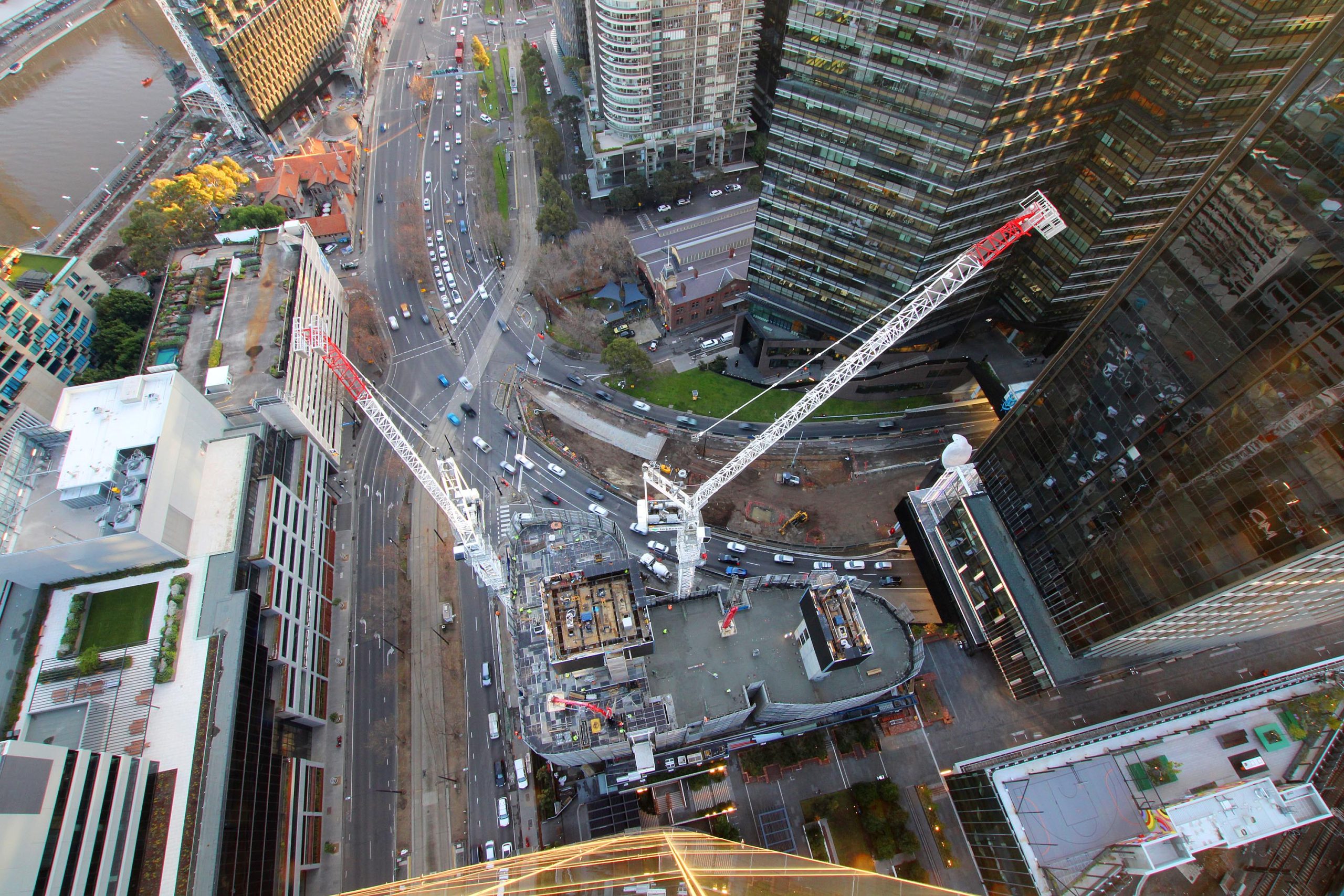
One of our most challenging installations brought those responsibilities into sharp focus. Working on Lendlease’s West Tower at Melbourne Quarter project in Docklands, our team needed to install a camera on top of the neighbouring East Tower building. The camera would extend over the edge of the 40-storey building and document construction for approximately three years. The location had no existing guardrail. For us, the defining part of that project was not the height or the final camera view. It was the preparation that happened before the team reached the rooftop.
The work started on the ground
In the days before the construction time-lapse installation, our team spent hours rehearsing the work sequence on the ground. We wanted everyone to understand their role and how their tasks fitted into the overall installation. Crucially, each person needed to understand how to perform their part safely. The rooftop was not the place to work out who would do what. Practising beforehand gave us time to walk through the sequence, discuss responsibilities and build a shared understanding of the job.
That rehearsal formed part of our preparation. It was not a substitute for the project-specific safety controls, access arrangements and installation procedures required for the work. The lesson has stayed with us: demanding installations need deliberate planning, not confidence alone.
A camera installation is still site work
Clients naturally focus on what the camera will produce.They want clear progress images, useful site visibility and a high-quality final video. Those outcomes matter, but achieving them starts with understanding the installation environment. Every camera location brings its own challenges.
A position might involve restricted access, a neighbouring property, changing site conditions or a mounting point that needs careful assessment. A strong visual angle may also create practical difficulties for installation and maintenance. That is why we do not treat long-term time-lapse as a quick photography job.
Our team needs to work within the site’s requirements and coordinate with the people responsible for access, logistics and safety. The camera may be small compared with the construction around it. The responsibility involved in putting it there is not.
High-angle construction photography capturing tower cranes and structural works within a dense city streetscape.
Three years changes the planning conversation
A camera intended to remain in position for approximately three years requires a different conversation from a short photography visit. Installation day is only the beginning. The team needs to consider the system’s full working life. That includes the mounting arrangement, power, connectivity, future access and how construction may change the view.
Questions worth resolving early include:
Will the location remain available throughout the project?
Who controls access to the building or mounting position?
How will the team arrange maintenance visits?
Could new structures or temporary works obscure the camera?
What happens if site contacts or access arrangements change?
How will the team eventually remove the system?
These questions are easier to address before installation than after the project is underway. Long-term time-lapse needs long-term thinking.
Clear roles matter as much as good equipment
On the East Tower installation, our ground rehearsal centred on making sure everyone understood their job. That might sound straightforward. In practice, it requires time and attention.
A team can include experienced people and still need a clear, shared work sequence. Individual experience does not automatically establish who will perform each task or how the team will coordinate. For us, preparation meant making those responsibilities explicit before the installation. It also reflected a broader business principle: we should never become complacent because we have completed difficult jobs before. Every site deserves a fresh assessment. Every installation deserves proper attention.
Early involvement creates room to prepare
Some clients contact us shortly before construction starts. Others call after work has already begun. We understand that project teams manage competing priorities. However, short notice can limit the time available to secure access, assess locations and coordinate construction time-lapse installation. Bringing a time-lapse provider into pre-construction planning creates room to do that work properly. It also gives the team a better chance of capturing the project from its earliest stages.
That is especially important when the preferred camera position sits outside the project boundary or requires unusual access arrangements.
The finished film starts with the work behind it
The MQ2 installation reinforced something fundamental about our approach. High-quality construction time-lapse depends on more than image quality. It depends on the professionalism behind the camera: planning, communication, teamwork and respect for the site. The final audience may never see that preparation. But for our team, it is part of delivering the finished result.
Planning a long-term construction time-lapse? Contact Capture Point Media early to discuss camera positions, site requirements and the preparation your project needs.